Remote Wilderness
Selous Game Reserve
Africa's Largest Protected Wilderness
Discover Selous
To understand the scale of Selous Game Reserve, consider this: it is larger than Switzerland. Larger than Denmark. Larger than the entire country of Costa Rica. At 50,000 square kilometres, Selous is Africa's largest protected wildlife reserve — a wilderness so vast that you could explore it for weeks and still discover new corners.
But size alone does not capture what makes Selous extraordinary. This is remote wilderness in the truest sense — a place where the rhythm of nature continues largely undisturbed, where visitor numbers remain low, and where the experience feels profoundly different from the better-known northern parks. Here, you are not witnessing Africa's wildlife — you are immersed in it.
A Landscape Defined by Water
Unlike the savannahs of the Serengeti or the crater walls of Ngorongoro, Selous is shaped by its rivers. The mighty Rufiji River flows through the heart of the reserve, its channels and tributaries creating a network of waterways that define the landscape and the wildlife viewing experience.
This abundance of water supports an extraordinary diversity of life. Hippos congregate in pods that can number in the hundreds, their grunts and bellows echoing across the water. Crocodiles — some reaching truly massive proportions — bask on sandbanks or glide silently through the shallows. The riverbanks attract elephants, buffalo, and countless other species that come to drink.
The presence of water also means that Selous offers something rare in Tanzania: boat safaris. Drifting quietly along the Rufiji as the sun sets, watching elephants wade across channels and herons stalk the shallows, provides a perspective on African wildlife impossible to gain from a vehicle.
Wildlife in Abundance
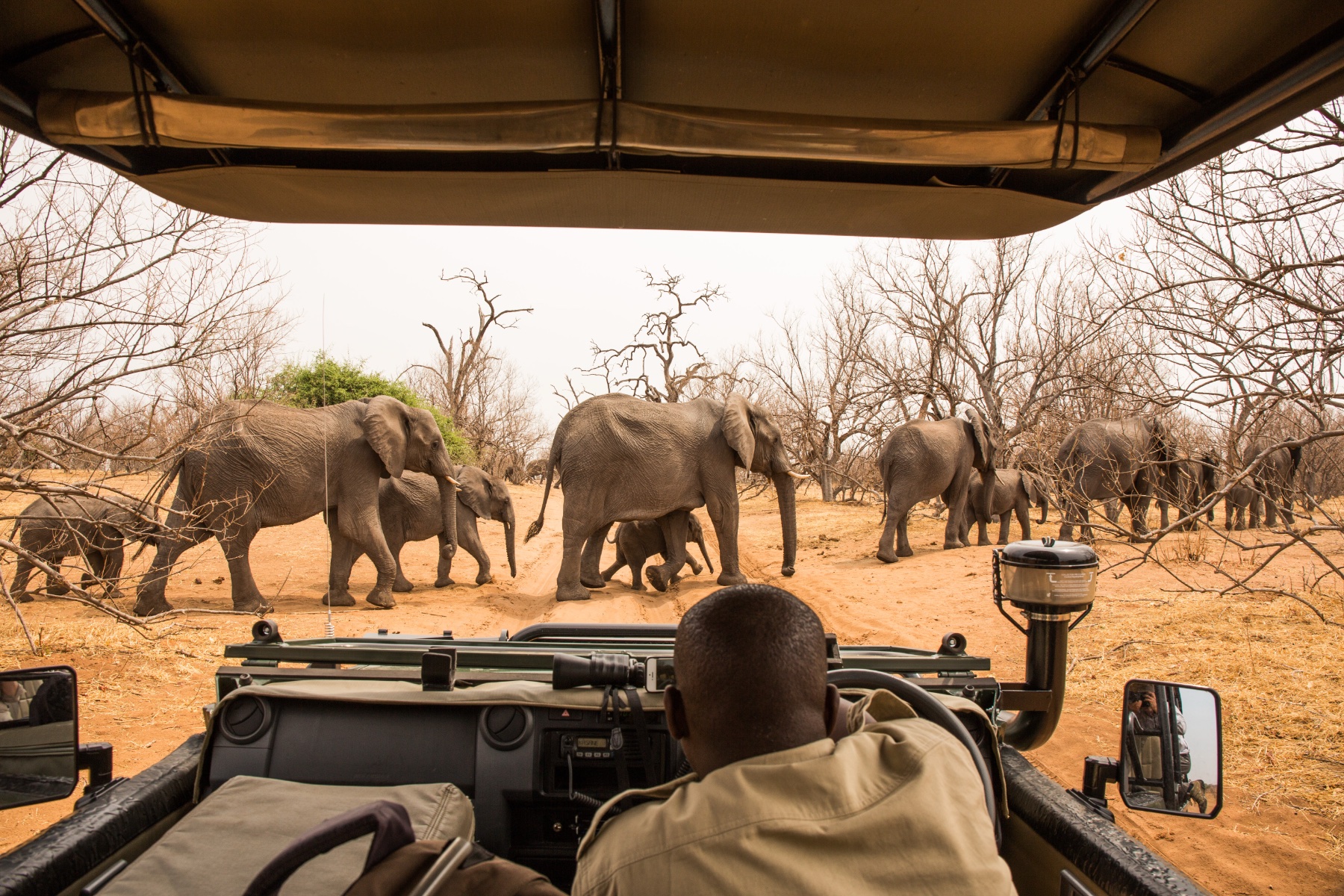
Selous harbors some of Tanzania's largest populations of endangered species. The reserve is home to over 50,000 elephants — one of the continent's most significant populations. While poaching has taken a terrible toll over the years, conservation efforts continue, and seeing elephant families moving through the miombo woodland remains one of Selous's great pleasures.
The reserve also protects one of Africa's last strongholds for wild dogs — those beautiful, misunderstood predators with their painted coats and complex social structures. Spotting a pack on the hunt is thrilling — they move with coordination and stamina that few predators can match, capable of pursuing prey for kilometres until exhaustion brings it down.
Lions are common throughout the reserve, as are leopards (though they remain elusive). Spotted hyenas patrol in the darkness. Cheetahs prefer the more open areas. The full cast of African predators is present here, thriving in this vast wilderness.
Buffalo herds can be massive, numbering in the thousands. Greater kudu, with their magnificent spiral horns, are more easily spotted here than in many northern parks. Sable antelope, another striking species, inhabit the woodlands. And everywhere, there are birds — over 440 recorded species, from fish eagles to kingfishers to the magnificent ground hornbill.
Walking Safaris: The Selous Specialty
Selous pioneered walking safaris in East Africa, and they remain one of the reserve's signature experiences. Setting out on foot, accompanied by an armed ranger and experienced guide, connects you to the wilderness in ways no vehicle ever could.
Every sense sharpens. You notice the smallest details — the architecture of a termite mound, the scent of wild herbs crushed underfoot, the distant call of a fish eagle. You learn to read tracks: the pad prints of a leopard from the previous night, the three-toed tracks of a rhino (yes, black rhinos once roamed here in numbers, and efforts continue to reintroduce them).
Your guide will point out medicinal plants, explain how different animals use the landscape, and share insights into the bush that only come from years of intimate familiarity. And when you encounter wildlife on foot — perhaps a family of elephants browsing ahead, or a herd of buffalo crossing your path — the adrenaline is real, the experience profound.
The Miombo Woodland
Much of Selous is covered in miombo woodland — a distinctly African ecosystem dominated by Brachystegia trees. This is not the open savannah of the Serengeti, but rather a more closed landscape where dappled light filters through the canopy and the undergrowth is thick and verdant.
The miombo supports different species than open grassland. Greater kudu and sable antelope thrive here. Elephants browse the woody vegetation. Lions use the cover for stalking. The woodland transforms with the seasons — lush and green during the rains, golden and drought-stressed in the dry months, creating an ever-changing canvas.
Fly Camping: Under African Stars
For those seeking the ultimate wilderness experience, Selous offers fly camping — lightweight, mobile camps set up in remote areas far from permanent lodges. You sleep under canvas with only mosquito netting between you and the night sky, falling asleep to the sounds of hippos grunting and hyenas calling.
This is Africa as it was experienced by the early explorers — immediate, slightly raw, profoundly real. You wake before dawn to the calls of fish eagles, breakfast over an open fire, and spend your days walking and exploring areas few people ever reach. It's not for everyone, but for those with a sense of adventure, fly camping in Selous is transformative.
A Place Apart
Selous feels different from the northern parks in fundamental ways. It's remote — getting here typically requires a flight from Dar es Salaam, as road access is challenging. Visitor numbers are a fraction of what you'll find in the Serengeti. The landscape is more varied, the experience more adventurous, the sense of wilderness more complete.
This is not a park for those seeking guaranteed Big Five sightings in a single day, or for those who prefer creature comforts over wild encounters. Selous rewards patience, flexibility, and a willingness to embrace the unpredictability of true wilderness. In return, it offers something increasingly rare: the sense that you are discovering rather than merely visiting.
Conservation Challenges and Hopes
Selous has faced significant conservation challenges, particularly from poaching that devastated elephant populations between 2009 and 2015. The reserve lost over half its elephants during this dark period. However, intensive anti-poaching efforts have begun to turn the tide, and populations are slowly recovering.
The reserve was designated a UNESCO World Heritage Site in 1982 in recognition of its extraordinary biodiversity and relatively undisturbed condition. Protecting it remains crucial not just for Tanzania but for global conservation efforts. Tourism plays a vital role in this protection — providing both economic incentive for conservation and eyes on the ground to deter illegal activities.
Why Choose Selous
If the northern circuit parks offer spectacular wildlife viewing in relatively concentrated areas, Selous offers something else entirely: space, solitude, and the profound satisfaction that comes from exploring true wilderness. This is a place for those who have perhaps already done a northern safari and want to go deeper, or for those seeking a more adventurous alternative to the well-trodden paths.
The combination of boat safaris, walking safaris, and traditional game drives creates a more varied experience than most parks can offer. The remoteness ensures you'll never feel crowded. And the knowledge that you're exploring Africa's largest protected wilderness — a place vast enough to still hold mysteries — adds a dimension of adventure that's increasingly hard to find.
Selous is not for everyone. But for those it calls to, it offers something irreplaceable: the chance to experience Africa as it once was, and as it should always be.
Quick Facts
50,000+
Elephants
Wild Dogs
Rare African wild dogs
Boat Safaris
Rufiji River adventures
UNESCO
World Heritage Site
Planning Your Visit
Best Time to Visit
June to October (Dry Season). Reserve partially closes during heavy rains (March-May)
Recommended Duration
Minimum 3 nights, ideal 4-5 nights for walking safaris and river experiences
Accommodation Options
Remote luxury camps and lodges
Getting There
Short flight from Dar es Salaam (45 minutes). Road access challenging
Explore Africa's Largest Wilderness
Experience true remote wilderness with boat safaris, walking safaris, and unparalleled solitude in one of Africa's last great wild places.